
Significant changes to the Fringe Benefit Tax (FBT) rules for motor vehicles are on the horizon, and employers should start considering how these could affect their businesses.
The proposed changes are included in the Taxation Bill, currently before Parliament, with an intended commencement date of 1 April 2027.
While the changes are not yet law, they aim to simplify FBT calculations and reduce compliance costs for employers. However, they could also affect the amount of FBT some businesses pay, particularly for work vehicles that are available for private use.
What's changing?
Under the current rules, motor vehicle FBT is generally calculated based on the number of days a vehicle is available for private use, together with its cost price or tax book value and any employee contributions.
The proposed rules would replace this day-counting approach with six vehicle categories, each with a prescribed percentage of private use.
Rather than calculating the number of days a vehicle is available for private use each quarter, employers would generally classify vehicles based on their expected business and private use.
The intention is to make FBT simpler to calculate and administer.
The six proposed vehicle categories
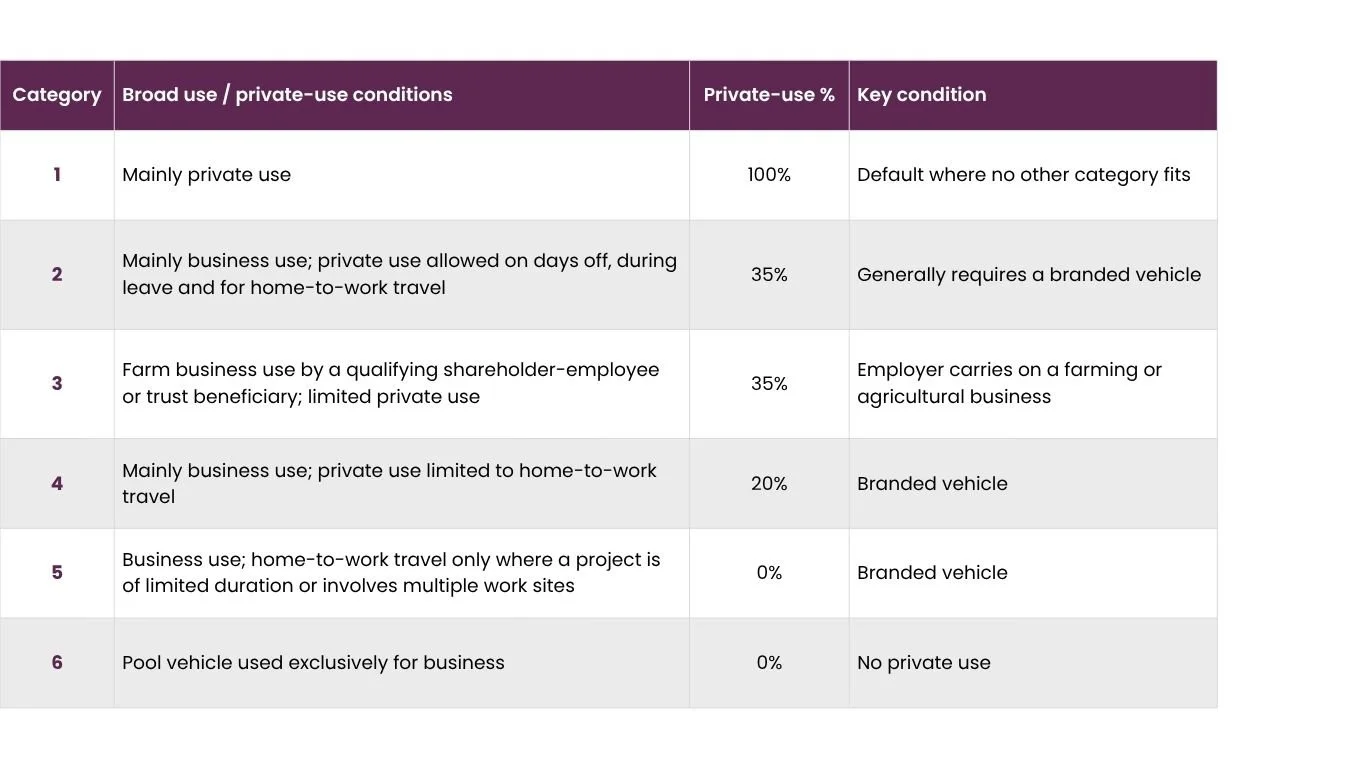
Category 1 would apply to vehicles available for unrestricted private use and would be the default if an employer does not select another category.
Category 2 is expected to capture many vehicles currently subject to FBT calculations based on days available for private use.
Category 6 is intended for genuine pool vehicles that are used exclusively for business purposes.
An important distinction remains: travel between home and work is generally considered private use, while business use continues to mean travel undertaken wholly and exclusively in deriving income.
What about work-related vehicles?
One significant proposed change is the removal of the existing work-related vehicle exemption.
Under the current rules, this exemption can reduce or eliminate FBT on qualifying work-related vehicles, including certain work utes.
Under the proposed category system, some of these vehicles may become subject to a higher amount of FBT.
This makes it particularly important for employers to understand how their vehicles would be classified under the new rules.
What should employers be doing now?
Although the legislation has not yet been finalised, there are several practical steps employers can take to prepare.
Review vehicle branding
Some of the proposed categories require vehicles to display prominent, permanent business branding. Magnetic signs or other easily removable signage would not qualify.
There are proposed exceptions, including for vehicles purchased or leased before the Bill was introduced, certain farming vehicles and other specified circumstances.
Employers should check which vehicles may need branding and retain records of vehicle acquisition or lease dates.
Prepare or update your vehicle register
Make sure you have an accurate record of all business vehicles, including purchase or lease dates, cost prices and current tax book values.
This will help when assessing how vehicles might be classified and valued under the proposed rules.
Document how vehicles are used
Review the expected business and private use of each vehicle, including:
• Travel between home and work
• Weekend and holiday use
• Travel between different work sites
• Incidental private use
It's important that documented arrangements reflect how vehicles are actually used in practice.
Identify the appropriate vehicle category
Consider which of the six proposed categories would apply to each vehicle in your business.
This may highlight vehicles where the proposed FBT treatment differs from the current position.
Review your pool vehicles
Identify vehicles that genuinely meet the proposed requirements for pool vehicles.
Where vehicles are assigned to particular employees or regularly used for travel between home and work, consider whether those arrangements would affect their classification.
Review vehicle valuation methods
Consider whether using the vehicle's cost price or tax book value would provide the most appropriate basis for calculating FBT under the proposed rules.
Review your internal processes
Consider what changes may be needed to your existing FBT records, vehicle-use policies and reporting systems to accommodate the proposed categories.

Getting prepared for the changes
While the new rules are intended to simplify FBT, they could affect both the amount of tax payable and how employers manage their vehicle fleets.
Reviewing your current arrangements now will help you identify potential changes and make informed decisions before the proposed commencement date.
The existing FBT rules continue to apply until the legislation is enacted and the relevant changes take effect.
If you'd like assistance reviewing your vehicle arrangements or understanding how the proposed changes could affect your business, get in touch with your Campbell Tyson adviser.